The most popular route on Kilimanjaro – stunning scenery, excellent acclimatisation and a high summit success rate.
Machame is the route we recommend most. Seven days gives your body time to adapt, and the “climb high, sleep low” profile – especially via the Lava Tower – noticeably improves your chance of reaching Uhuru Peak.
You will walk through montane rainforest, heath and moorland, cross the Shira Plateau, scramble up the famous Barranco Wall and approach the summit at midnight from Barafu Camp.
Pick-up at Kilimanjaro International Airport and transfer to your hotel in Moshi. In the evening your lead guide runs a full briefing and gear check – anything missing can be rented locally.
Overnight: Moshi hotel (B&B)
Drive to Machame Gate, register and hike 5-6 hours through lush rainforest full of colobus monkeys.
Overnight: Machame Camp
Leave the forest behind and climb onto the open moorland with your first wide views of Kibo.
Overnight: Shira Cave Camp
A key acclimatisation day: climb to the Lava Tower for lunch, then descend to sleep at Barranco.
Overnight: Barranco Camp
Scramble the Barranco Wall (no technical skills needed) and traverse to Karanga Valley.
Overnight: Karanga Camp
A short climb to base camp. Rest, early dinner and summit preparations.
Overnight: Barafu Camp
Start around midnight, reach Stella Point at dawn and continue to Uhuru Peak, the Roof of Africa. Descend to Mweka Camp.
Overnight: Mweka Camp
Final descent through the rainforest to the park gate, where you receive your summit certificate and celebrate with your crew. Transfer back to Moshi for a well-earned hot shower.
Overnight: Moshi hotel (B&B) – or continue to safari or Zanzibar
| Where | What to expect |
|---|---|
| Before & after the climb | Two nights in a comfortable hotel in Moshi or Arusha with breakfast, hot showers and secure luggage storage. |
| On the mountain (standard) | Four-season mountain tents for two, thick sleeping mats, a dining tent with table and chairs, and freshly cooked meals. |
| Comfort upgrades | Private toilet tent, single-occupancy tents, extra-thick mattresses and additional oxygen — just ask. |
The driest months are late June–October and January–early March. April–May and November are wetter but quieter.
No technical climbing skills are needed, but you should be able to hike 5–8 hours a day. Train with long walks, hill hikes and stairs for 2–3 months before you travel.
Our licensed guides check your oxygen saturation and pulse twice a day, carry emergency oxygen and first-aid kits, and follow a clear evacuation plan. Your safety always comes before the summit.
Layered clothing, a warm down jacket, waterproofs, broken-in boots and a 4-season sleeping bag (rental available in Moshi). We send a full checklist after booking. More advice on our travel info page.
No. Kilimanjaro is a trek, not a technical climb. Good fitness and a positive mindset matter most.
Our crew receive fair wages, proper equipment and load limits. Happy crews make safer, better climbs.
Yes — sleeping bags, jackets, poles and more are available to rent in Moshi.
Yes, most climbers add a 3–5 day safari or a few beach days in Zanzibar afterwards. We plan it as one seamless trip.
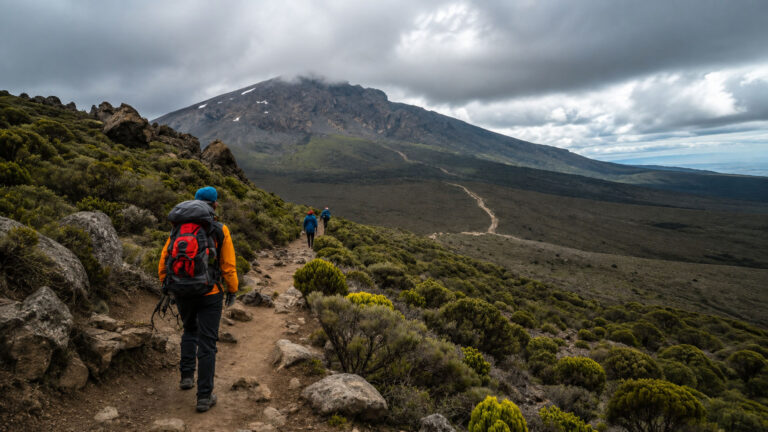
Uhuru Peak 5,895 m · Challenging
Our top pick for summit success: a quiet, scenic western route with an extra day for acclimatisation.
Uhuru Peak 5,895 m · Moderate - challenging
The only Kilimanjaro route with hut accommodation – with an extra acclimatisation day at Horombo.
Uhuru Peak 5,895 m · Moderate - challenging
A quiet, drier route from the northern side – excellent for the rainy season and for less-experienced hikers.
Every itinerary can be adjusted — more days, different camps, add Zanzibar or Kilimanjaro. Tell us what you have in mind and we will tailor it within 24 hours.