




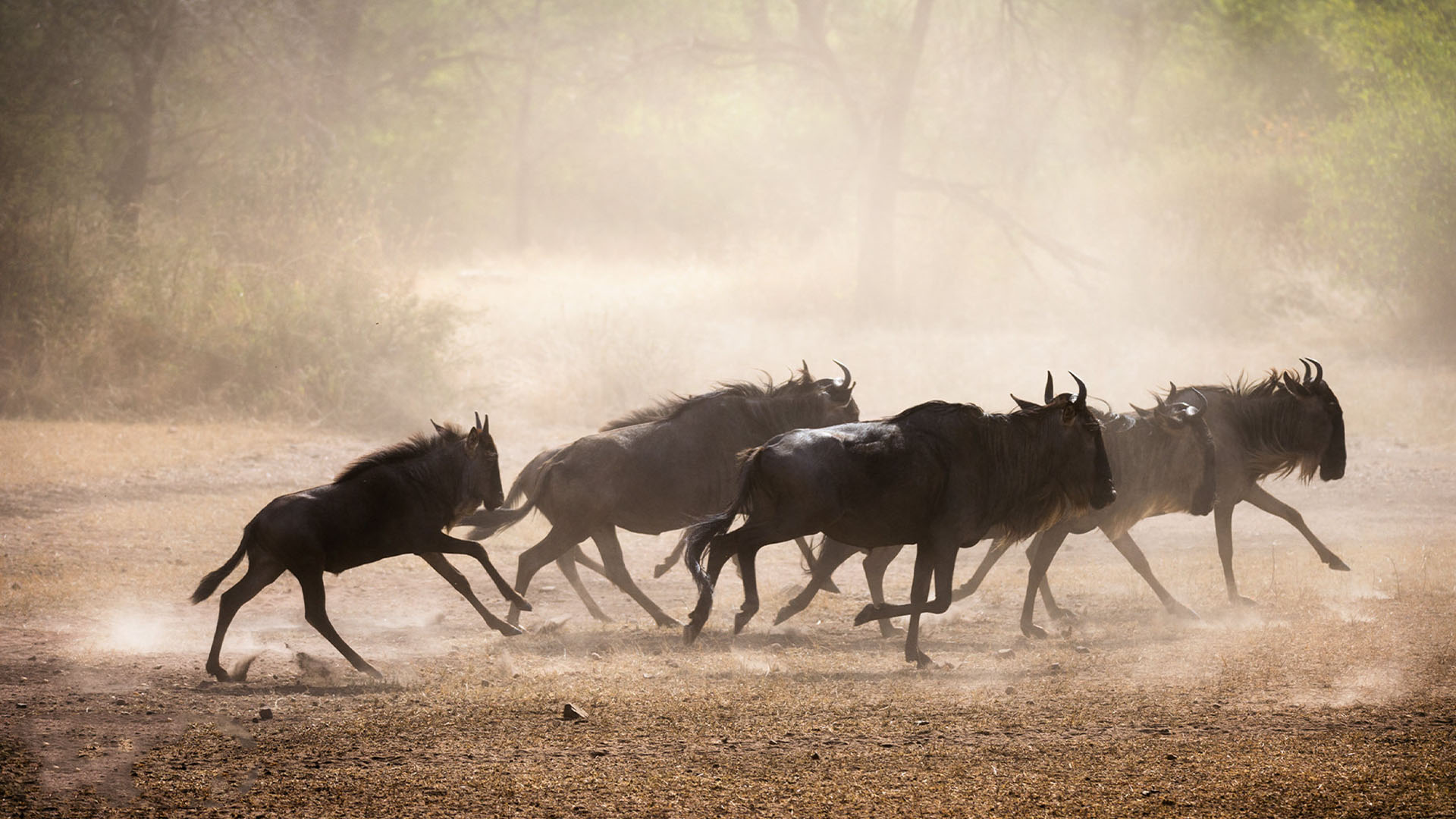
Every year, around 1.5 million wildebeest, together with hundreds of thousands of zebra and gazelle, travel a giant loop through the Serengeti ecosystem in search of fresh grass and water. There is no start or finish – the herds are always somewhere. The trick is knowing where, and placing your camp close by.
December to March: the southern plains
The herds settle on the rich short-grass plains around Ndutu and the southern Serengeti. Calving peaks around February, when thousands of calves are born each day. Predators follow closely, making this one of the most exciting times for big-cat sightings.
April and May: on the move
With the long rains, the herds begin moving north-west through the central Serengeti. It is a quieter season with fewer vehicles, lush landscapes and great value.
June and July: the Western Corridor
Herds gather in the Western Corridor and face their first big obstacle: the Grumeti River, home to huge Nile crocodiles. By late July many are heading north.
August to October: the Mara River
The famous river crossings take place in the far northern Serengeti near Kogatende, as herds cross the Mara River back and forth. Crossings are unpredictable – patience and an experienced guide make all the difference.
November: heading south again
With the short rains, the herds stream back down the eastern Serengeti towards the southern plains, and the cycle begins again.
Tips for seeing the migration
- Spend at least 3 nights in the Serengeti, ideally in a seasonal camp near the herds.
- Remember nature does not follow a timetable – rains can shift movements by weeks.
- Choose a private safari so you can wait at a crossing point for as long as it takes.
- Book early for August-September; northern camps fill up fast.
Our 7-day migration safari is designed around the herds’ position in your travel month.
Want to see the migration? Start planning your tailor-made trip or message us on WhatsApp (+255 763 222 443).